Rules your reviews follow
Effective configuration shows every setting a review runs with and where it came from. Workspace policy can lock a key, the rule files you keep for coding agents apply too, and learnings are drafted from how your team answers findings.
Chapters
What it covers
- .inline.yml
- Workspace policy
- AI rule files
- Learned rules
Where each rule an inline review follows comes from: .inline.yml, a locked workspace policy, AGENTS.md and CLAUDE.md, and rules learned from your team.
Read about Repo memoryTranscript
The narration as spoken, by chapter. Select a time to play the film from there.
Intro
inline reviews every pull request by your team's own rules, and shows where each one came from.
Effective configuration
Commit a .inline.yml file, and Effective configuration shows every setting a review runs with, and where it came from.
Workspace policy
Workspace policy can lock a key, and no repository can override it.
Precedence
Otherwise, the most specific layer wins. Files are read from the default branch, so a pull request never configures its own review.
Directory and AI rule files
Directory files cover one part of the tree. And the rule files you keep for coding agents, AGENTS.md, CLAUDE.md, Cursor rules, apply too.
Learnings
Learnings are house rules, taught on a pull request, or drafted from how your team answers findings.
Rule lifecycle
Three dismissals across three pull requests draft a suggestion. Agreement promotes it, and contradictions retire it.
Review context
Reviews can read related repositories too, read-only.
Review tools
And your own MCP servers: only the read-only tools you approve, held again if they change. inline. Reviews that follow your rules.
More films
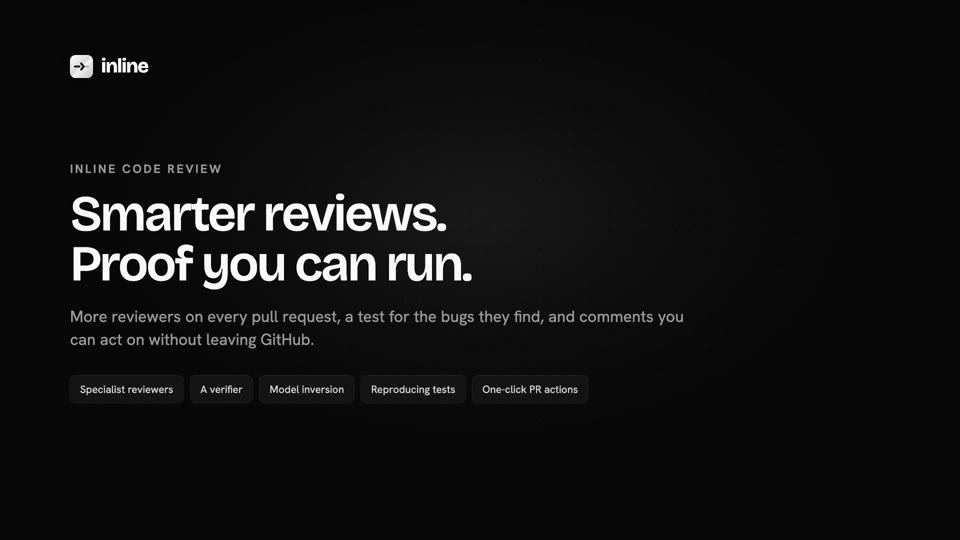 1:31Smarter reviewsSpecialist reviewers, a verifier, model inversion and tests that reproduce each bug.Watch
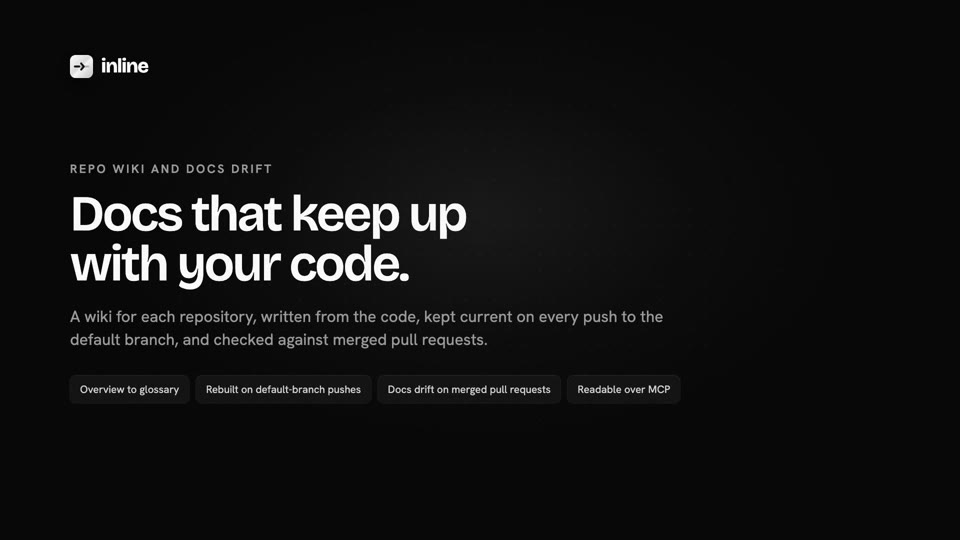 1:31Repo wiki and docs driftA wiki per repository, rewritten on every push, and a check that quotes stale docs.Watch
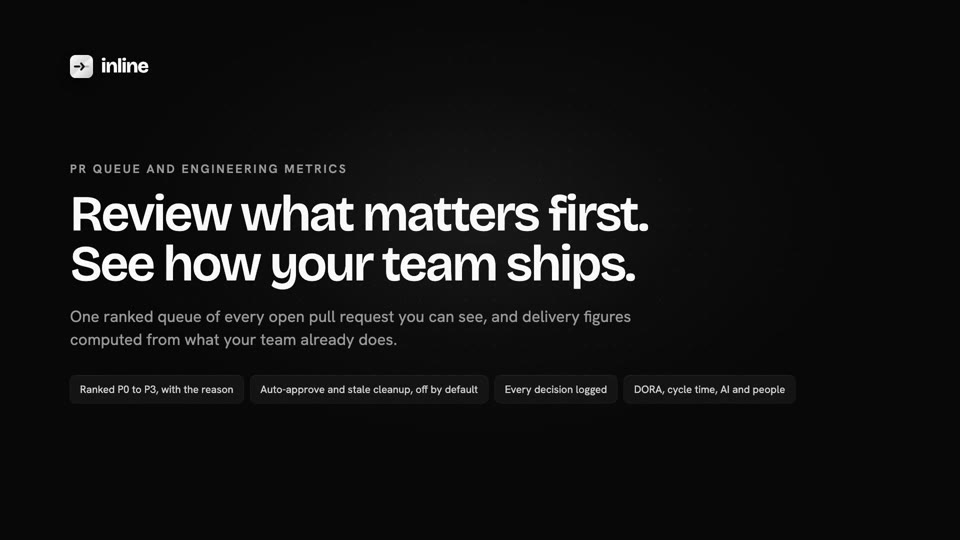 1:31PR queue and engineering metricsEvery open pull request ranked with a reason, and DORA figures from what you have.Watch
Put it on one repository
Connect GitHub or GitLab, enable a repo, and the next pull request opened gets a review.